Home
News & events
News
Economy
Budget must send a clear message: Australia is open for business on renewable energy

Home
News & events
News
Economy
Budget must send a clear message: Australia is open for business on renewable energy
May 12, 2026
Originally published in RenewEconomy
.jpeg)
Plans to spend billions boosting Australia’s long-term fuel reserves may offer short-term reassurance, but they don’t address the underlying problem.
Australia remains deeply exposed to global fuel markets and long, complex supply chains for everything from oil and refined petroleum to all of the manufactured goods we love and rely on. In an increasingly unstable geopolitical environment, that is a growing economic risk.
Instead, our world-class solar and wind resources could be harnessed to power a new generation of domestic manufacturing for clean technology supply chains – including solar, wind, batteries, heat pumps and commercial electric vehicles.
Beyond Zero Emissions modelling shows that capturing just 30 to 40 per cent of these key clean energy supply chains could generate more than $215 billion in revenue and create 53,000 jobs by 2035.
Unlike fossil fuels, renewable energy does not depend on continuous global supply. Once built, the “fuel” is domestic, abundant, and immune to international shocks.
Lower and more stable energy costs are also the foundation of globally competitive manufacturing and heavy industry.
Secondly, proposed capital gains tax changes risk undermining the foreign investment needed to finish Australia’s energy transition.
The large-scale build-out of solar, wind and storage relies heavily on international investment. More than 70 per cent of recent renewable energy and grid infrastructure projects have been backed by foreign capital.
But, capital is mobile. It flows to countries with stable, predictable policy settings and competitive returns. Adding new uncertainty now risks slowing renewable energy projects, increasing costs, and ultimately pushing up power prices.
If the Australian government wants to meet its clean energy and industrial ambitions it needs to send a clear, consistent signal: this is a competitive place to invest.
In terms of opportunities, the budget must prioritise the infrastructure that unlocks entire regional economies.
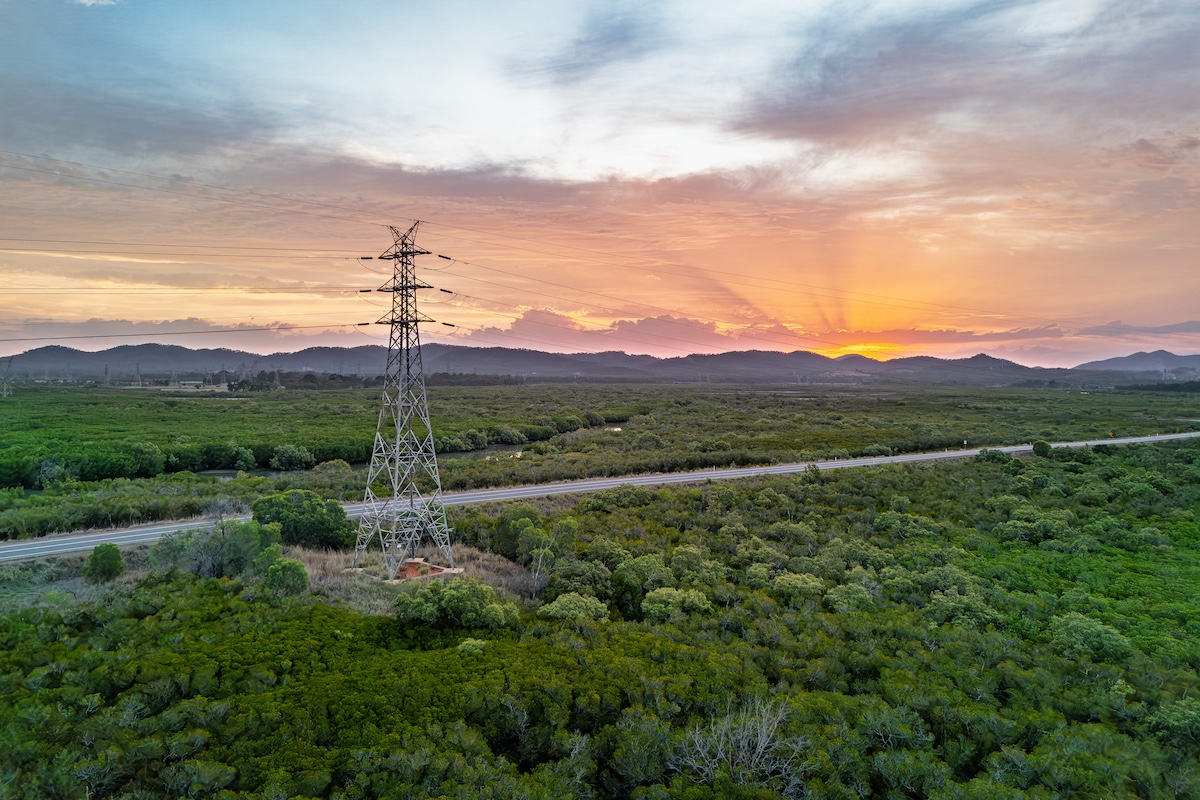
Transmission lines are the backbone of our energy transition. They determine how much cheap and clean renewable energy can reach industrial centres, and therefore how much industry can electrify and grow. Without them, even the best renewable resources remain stranded.
Beyond Zero Emissions has identified a small number of critical projects that would have an outsized impact on Australia’s economic resilience, including the Hunter Transmission Project in New South Wales and Gladstone Project in Queensland, alongside key projects in Western Australia.
These projects will shape Australia’s industrial future for decades.
In the Hunter, the transmission project is essential to powering the Tomago aluminium smelter, which supports thousands of jobs and underpins the broader industrial ecosystem.
In Gladstone, transmission capacity will determine whether existing industries, like the Boyne Smelter, can decarbonise and whether new clean industries can emerge.
These projects also illustrate a broader point: governments are not being asked to pick winners. They are being asked to build the infrastructure that enables modern, competitive industries to grow.
Targeted investment in shared infrastructure like transmission, ports and rail, raises the floor for entire regions, enabling private investment to follow.
Our heavy industry, like smelters, should also be supported to electrify and modernise, not simply kept alive through bailouts
Finally, the budget must recognise that Australia cannot do everything, everywhere, all at once. With constraints on labour, capital, supply chains, and increasingly fuel, prioritisation is essential. The test should be simple: which investments deliver the greatest boost to economic resilience and self-sufficiency?
In a fuel-constrained world, that means focusing on projects that reduce our reliance on imported energy and build domestic capability.
The latest fuel crisis has again exposed what happens without a nationally coordinated industrial transition plan: decisions are reactive and expensive, and we remain exposed.
In a more volatile world, Australia’s economic resilience will depend on how quickly we can build a secure, electrified industrial economy powered by our own resources. This budget should be judged on whether it helps make that future possible.


_Page_01.jpg)

%201.webp)
