Home
News & events
News
Industry
Energy shocks are a warning: Energy security now defines economic security

Home
News & events
News
Industry
Energy shocks are a warning: Energy security now defines economic security
May 1, 2026
Originally published in The New Daily
Even if the Strait of Hormuz reopens tomorrow, the shock will continue to ripple through global markets for months.
Oil and gas inventories and strategic reserves are being drawn down faster than they can be replenished, with analysts warning of a potential drop of at least 10 per cent in global oil supply, and prices will remain elevated.
In Australia, the cost of imported goods and household bills will follow, and there are warnings of possible job cuts in industries such as construction due high diesel prices.
As the US blockade persists, there are also reports Iran is running out of oil storage space and may have to start reducing production or even capping oil wells.
If this happens, later restarting production would be a costly and slow process, potentially taking many months to repair damaged reservoirs and wells.
Australians have seen this play out before. The 2022 energy crisis following Russia’s invasion of Ukraine triggered sharp increases in our petrol, gas and electricity prices. Global supply chains were strained and costs flowed through to our economy.
This is the hidden cost of dependence, and plans to spend billions to increase long-term fuel reserves do not address the root cause of this issue.
Australia remains deeply exposed to global fuel markets and long, complex supply chains for everything from refined petroleum to manufactured goods. An economy built on imported energy and products is, by definition, an economy reliant on geopolitical stability.
This is an increasingly fragile foundation.
The latest crisis reinforces a structural reality: Energy security is no longer just about access to fuels – it is about control over the systems that power the economy.
This is where Australia holds a largely untapped advantage.
We have some of the best solar and wind resources in the world. And, Beyond Zero Emissions modelling found that capturing just 30 to 40 per cent of key supply chains of critical clean energy technologies through domestic manufacturing could generate more than $215 billion in revenue and create 53,000 jobs by 2035.
Australia can once again become a manufacturing nation by producing the inputs to the clean economy – batteries, wind turbine and solar panel components, heat pumps and electric buses and trains.
Importantly for investors and policymakers, these are not speculative industries, they are already scaling globally and they fundamentally alter the risk profile of our energy system.
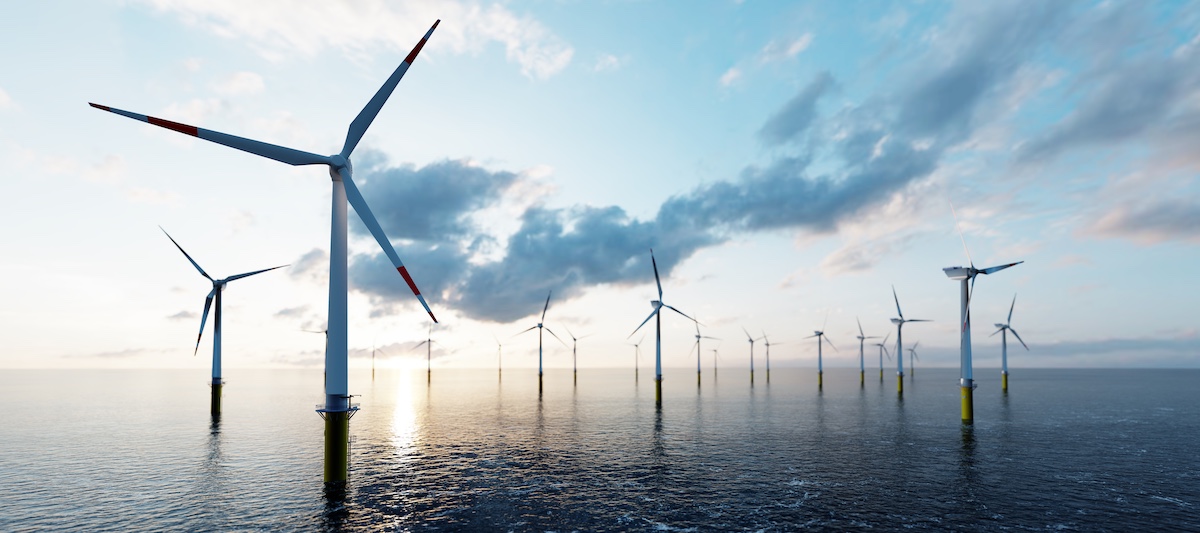
Unlike fossil fuels, renewable energy does not rely on continuous global supply. Once the infrastructure is built, the “fuel” – the sun and wind – is domestic, abundant and immune to global geopolitical shocks.
Energy is a primary input cost for heavy industry, and lower, more stable energy costs underpin globally competitive manufacturing. In this context, the transition to renewable energy is not simply about decarbonisation – it is about ensuring energy security and rebuilding sovereign industrial capability.
Local, electrified manufacturing powered by renewable energy also shortens and secures our own supply chains, while continuing instead to rely almost solely on imported components for our energy grid is a critical vulnerability.
The tools to build sovereign, clean industry precincts already exist, the constraint is political and investment certainty.
Federal government support such as the $5 billion Net Zero Fund and $22.7 billion Future Made in Australia plan demonstrate its support and will provide that certainty and help industry afford the upgrades needed to electrify.
However, building and growing domestic manufacturing capacity also takes time. There needs to be continued support in the budget and stronger direction to industry from the federal and state governments, including fast-tracking key transmission projects and clean industry precincts.
The strategic opportunity is clear. In a world where the unimpeded flow of fuel and goods can no longer be taken for granted, we can either double down on fragile global supply chains, or power a new generation of electrified Australian industry with reliable, abundant, and home-grown renewable energy.
For policymakers and business leaders, this choice is not new, but it is becoming harder to ignore.
Australia has the resources, the technology and the capital to act.
What we need now is action to ensure we are prepared for the next global energy crisis.


.jpeg)

_Page_01.jpg)

%201.webp)
